
Kenakare Trip Advisors
A UNESCO World Heritage Site in Namibia, renowned for its ancient rock engravings and petroglyphs, offering a fascinating glimpse into the lives of Namibia's…
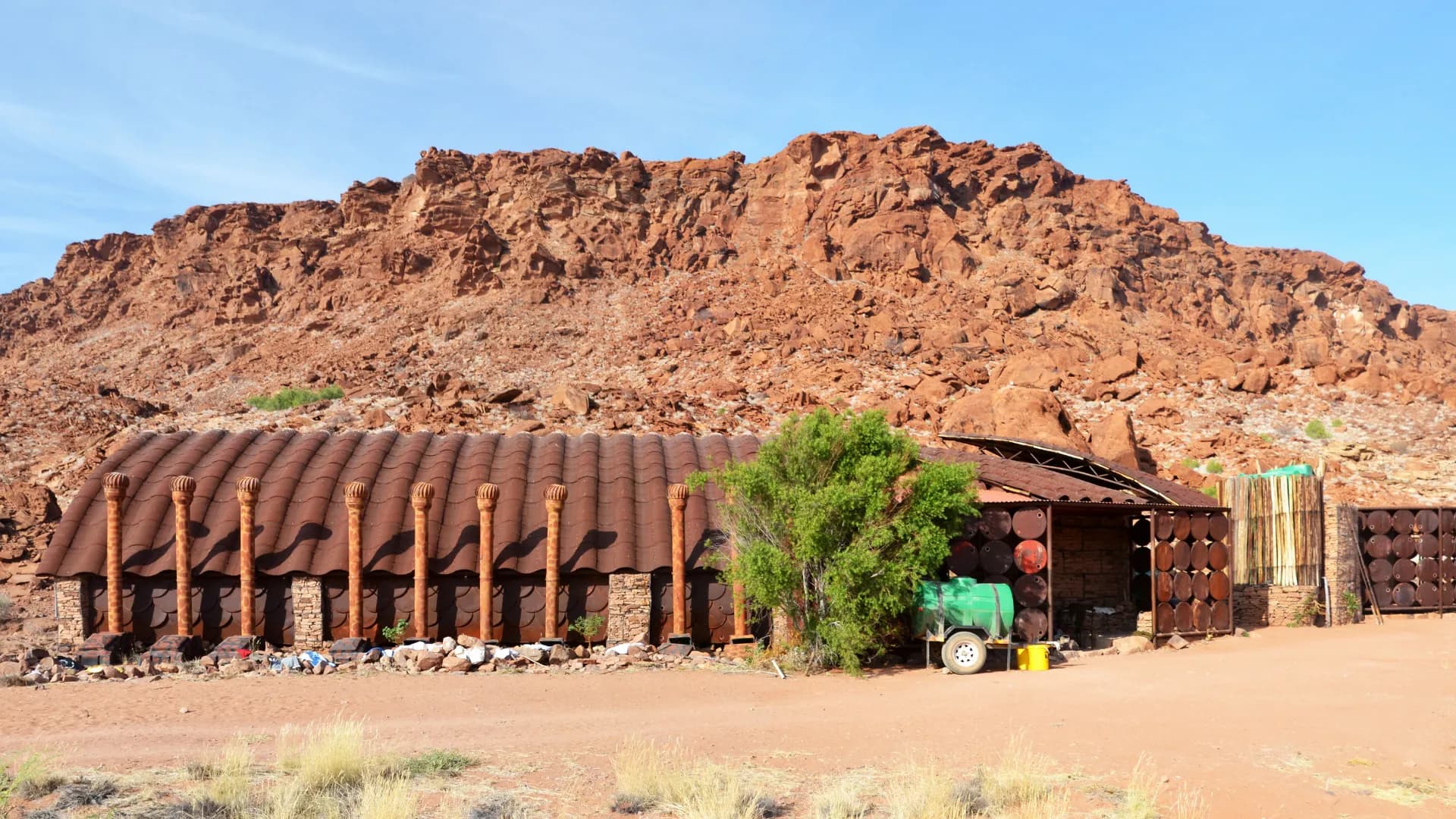
A UNESCO World Heritage Site in Namibia, renowned for its ancient rock engravings and petroglyphs, offering a fascinating glimpse into the lives of Namibia's earliest inhabitants. Dating back thousands of years, these intricate carvings depict a variety of animals, symbols, and human figures, providing valuable insight into the region's rich cultural heritage and prehistoric past. Explore the rugged desert landscapes of Twyfelfontein and marvel at the intricate artistry and cultural significance of these remarkable rock formations.
An encounter with one of Africa's most endangered and most impressive animals: the desert-adapted black rhino (Diceros bicornis bicornis), a sub-population of perhaps 200 animals living in the arid river valleys and rocky plains of Damaraland and Kaokoland — the world's only free-roaming, unfenced desert rhino population. This guided tracking experience operates in partnership with Save the Rhino Trust (SRT), whose team of community rangers has protected and monitored this population for over 40 years, building an encyclopaedic knowledge of individual rhino behaviour and movement that makes successful encounters — finding rhino on foot in a landscape of 5,000 km² — possible on the majority of tracking days. The session begins at first light with rangers reading the overnight spoor: fresh dung, hoof-prints in the sand, browse-height stripping on dry branches. When rhino are located — typically within 1–3 hours of tracking on foot — the approach is managed carefully to keep guests at a respectful distance where the rhino remains unaware, allowing extended observation of these ancient animals in their extraordinary desert environment. The Damaraland landscape itself is spectacular: angular black dolomite ridges, wide gravel plains studded with euphorbias, and the enormous silence of a wilderness far from any settlement. Minimum age 12 years. Morning departure; duration variable (4–7 hours depending on tracking conditions).
A guided visit to the Twyfelfontein Rock Art Site — a UNESCO World Heritage Site since 2007 and home to the largest concentration of rock engravings (petroglyphs) in Africa, with over 2,500 individual images carved into the red Etjo sandstone over a period spanning from approximately 6,000 years ago to more than 2,000 years BP. The engravings were made by San hunter-gatherer communities and depict the animals that defined their world — lion, giraffe, elephant, kudu, ostrich, rhino, and zebra — alongside extraordinary geometric symbols, human figures, and deeply enigmatic 'therianthropes' (half-human, half-animal figures) that scholars believe represent the shamanic trances through which San spiritual practitioners accessed the spirit world and performed rain-making rituals. The spring at Twyfelfontein (its name means 'doubtful spring' — the water was unreliable) made this a gathering place for game and humans over millennia, and your certified Namibia Tourism Board guide explains the layered human history of the site, the ongoing conservation challenges, and the current understanding of San spiritual beliefs through the detailed interpretation of specific engravings. The walk over the sandstone boulders takes approximately 1.5 hours and is partially shaded. Accessible to most fitness levels. National Monument entry fee included.
A vehicle-based tracking excursion in search of Damaraland's extraordinary desert-adapted elephant population — a genetically distinct group of African savanna elephants (Loxodonta africana) that have behaviorally adapted to survive in one of the most arid environments on Earth, covering ranges of up to 70 km per day to access seasonal water sources and navigate between isolated river valleys. These elephants are visibly different from their Etosha or Chobe counterparts: longer legs, slimmer bodies, and larger feet (broader footpads distribute their weight on soft desert soils), and a behavioural wariness that reflects millennia of survival in a landscape that offers nothing for free. Tracking typically begins at a riverbed where fresh footprints in the sand indicate overnight movement direction, and follows the tracks by vehicle through the characteristically dramatic Damaraland scenery — angular black ridges, open gravel plains, and the scattered candelabra euphorbias that the elephants sometimes browse. When the herd is located — typically within 2–3 hours — the vehicle approaches slowly and parks downwind to allow extended viewing without disturbing the animals' natural behaviour. A morning of tracking elephants through this landscape — and finding them — is among the most satisfying wildlife experiences Namibia offers. Duration variable (4–8 hours). Min 2 pax.
A guided 4 km return walk up the Tsisab Ravine on the southern flank of the Brandberg — Namibia's highest mountain at 2,573 metres — to visit the Maack Shelter, home of the famous 'White Lady' rock painting. The White Lady herself is a finely executed human figure approximately 40 cm tall, painted in white pigment with a distinctive running posture and decorated with red-and-white body paint, flower-like ornaments, and an animal-head headdress — a detail that marks her as a shamanic or ceremonial figure rather than an ordinary portrait. For decades, the figure was controversially attributed to Phoenician, Egyptian, or even Minoan artists — a theory comprehensively disproved but still circulating in popular accounts. Your guide explains the current scholarly consensus (San authorship, spiritual function) and points out the 40+ additional figures and painted animals in the same shelter that are typically overlooked by visitors focused on the 'White Lady'. The hike through the ravine is richly interesting in its own right: the Brandberg Massif creates its own microclimate, supporting unusual plants (including the ancient Welwitschia mirabilis along the approach road), resident klipspringer antelopes on the rocky slopes, and a series of seasonal pools in the riverbed that persist as permanent pools long after the rains. Early morning departure recommended to avoid the intense Brandberg heat. Sturdy footwear required.
